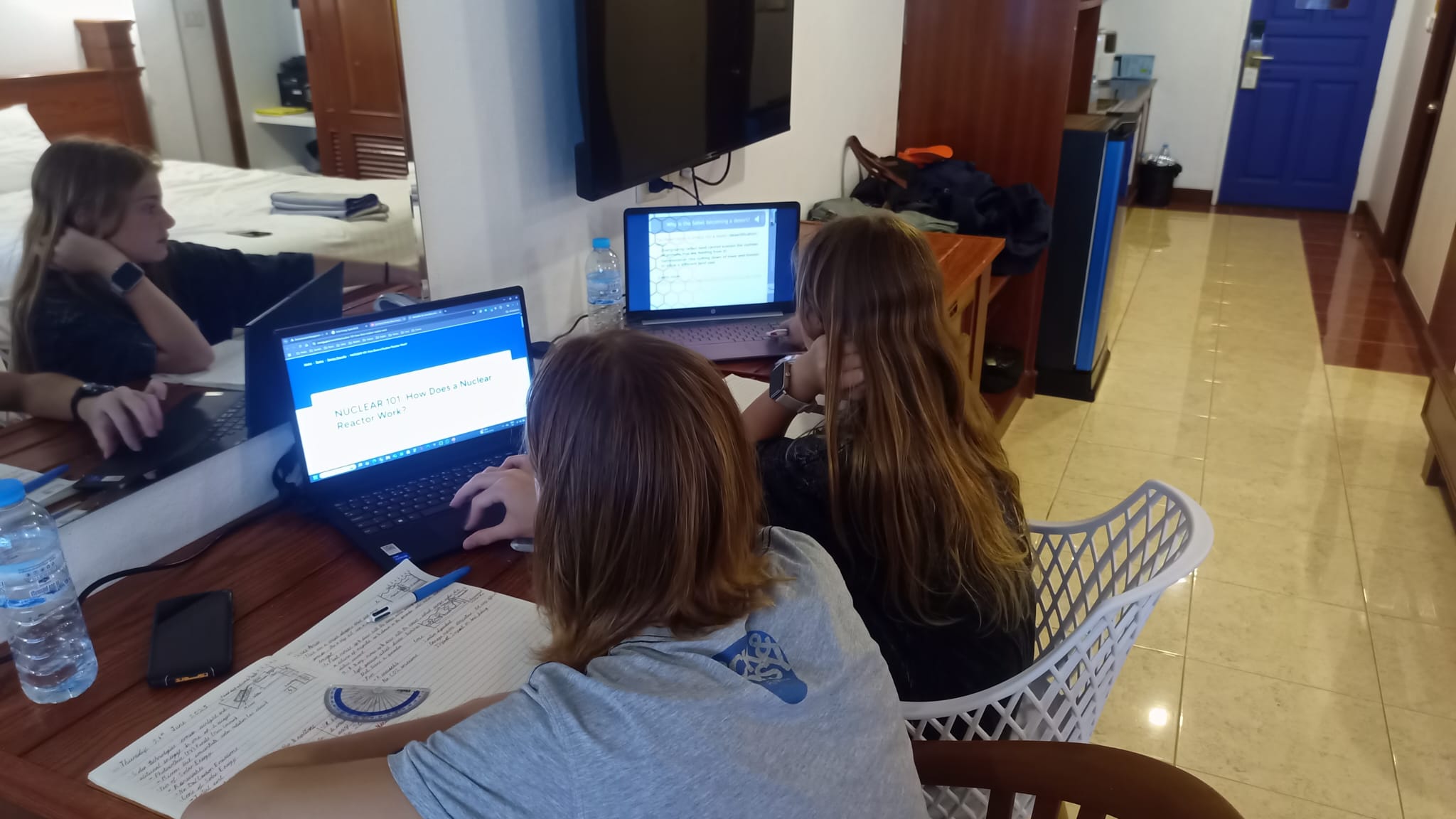

If your child is home educated and planning to sit GCSEs, IGCSEs or A Levels in 2027, one of the things you’ll need to organise is where they’ll take their exams.
Home-educated children usually sit exams as private candidates. This simply means that you, as their parent or carer, arrange and pay for their examinations through a registered exam centre.
I’ve booked exams for both of my home-educated children, and I remember how much information there was to work through when I first started researching everything.
Hopefully, this guide will make the process a little easier, particularly if you’re arranging exams for the first time.
We’ll cover choosing qualifications, finding an exam centre, what exams cost, the important 2027 deadlines and helping your child feel ready for exam day.
The short answer: You arrange exams through an approved centre that accepts private candidates, not directly with the exam board. Check the exact qualification and specification before booking, and allow plenty of time for any access arrangements.
1. GCSEs or IGCSEs: Which should you choose?
GCSEs and International GCSEs (IGCSEs) are recognised qualifications at the same academic level.
Many home-educating families choose IGCSEs because subjects such as Maths, English and Science can offer assessment routes based entirely on written examinations, avoiding the need to arrange coursework or practical assessment at an exam centre.
However, not every IGCSE is exam-only. Check the exact specification and assessment option before committing to a course, particularly for subjects involving speaking tests, coursework or practical work.
Two popular IGCSE exam boards are:
- Pearson Edexcel: Offers a wide range of International GCSEs.
- Cambridge International: Offers IGCSEs across many subjects.
Both offer widely recognised qualifications. However, if your child is working towards a particular college, sixth form or university course, check its entry requirements for the exact qualification, subject and grade.
Does my child have to be 16 to take GCSEs?
No. Children don’t have to wait until they’re 16 to take GCSEs or IGCSEs.
There is no general minimum age for taking these qualifications in the main summer examination series. Cambridge International explicitly states that its assessments have no age restrictions, although individual centres can have their own policies and some other examination series have different eligibility rules.
One of the advantages of home education is being able to take qualifications when your child is ready, rather than following the usual school timetable.
Your child might take Maths at 13, Science at 14 and English at 15, for example.
You can also spread subjects over several years rather than sitting everything in one summer.
2. Choosing your exam board and specification
Before booking exams, you need to know which exam board and specification your child is studying.
Each exam board publishes a specification (sometimes called a syllabus), which sets out exactly what students need to learn and how they’ll be assessed.
For example:
- Pearson Edexcel International GCSE Mathematics A: 4MA1
- Cambridge IGCSE Mathematics: 0580
Although both are Mathematics IGCSEs, they have different syllabuses and examination papers.
If your child uses an online learning platform, textbook or course, make sure it matches the specification you’ve chosen.
When booking, you’ll select the qualification and specification your child has been studying. For subjects with different examination tiers, such as some Mathematics qualifications, you’ll also need to select the appropriate tier. Check whether the subject includes any coursework, speaking or practical assessment that the centre must arrange.
My tip: Keep a simple list of your child’s subjects, exam boards and specification codes. You’ll need this information when booking exams and finding the correct past papers.
What about A Levels and International A Levels?
The booking process is similar: you still need to find a centre that accepts private candidates, confirm the exact qualification and pay the examination fees. But the assessment structure can be different.
- UK A Levels are generally linear, with examinations taken at the end of the course. For subjects with coursework, practical endorsements or other non-examination assessment, ask the centre how these are handled.
- Pearson Edexcel International A Levels are modular. Students take individual units, potentially across more than one examination series. The units must eventually be combined into an overall qualification grade using a process called cash-in. Make sure the centre understands which units and cash-in codes are needed, and keeps the same Unique Candidate Identifier (UCI) across sessions.
- Cambridge International AS & A Levels may allow a staged route in which AS examinations are taken first and eligible results carried forward, or all the required papers may be taken in one series. The options depend on the subject.
This is worth checking before choosing learning resources or booking exams. A Levels and International A Levels also have different fee arrangements, so don’t assume the GCSE budgeting figure below applies.
Useful starting points: Pearson Edexcel International A Level information and Cambridge International AS & A Level assessment options.
3. Finding an exam centre
You don’t book GCSEs or IGCSEs directly with the exam board. Instead, you arrange them through a registered examination centre, which enters your child for the qualification.
There are several ways to find somewhere suitable.
JCQ private candidate directory
The Joint Council for Qualifications (JCQ) provides a searchable directory of examination centres accepting private candidates.
You can search by postcode, qualification, exam board and subject.
Find an exam centre using the JCQ directory
Home Education Exams Wiki
Another resource frequently recommended in home education groups is the Home Education Exams Wiki.
It’s a free, community-maintained website containing information about qualifications, exam centres and the examination process.
There’s a huge amount of useful knowledge there, although I personally found it a little overwhelming when I was starting out.
I also found myself going around in circles. The Wiki suggested asking local home education Facebook groups about exam centres, but when I did, people directed me straight back to the Wiki!
The information relies on members of the community contributing and updating it, so some pages are more current than others.
Two particularly useful sections are:
- Finding an Exam Centre, which contains information about locating centres accepting private candidates.
- Home Ed Resources, which brings together free and paid learning resources, revision websites and online courses.
I’d use the Wiki as a starting point and then confirm the current details directly with the exam centre.
Independent exam centres
There are also specialist examination centres that cater for private candidates.
One example is Tutors & Exams, which has centres across England offering GCSEs, IGCSEs, A Levels and International A Levels.
Other independent examination centres operate locally and can be found through online searches or recommendations from home-educating families.
Local schools and colleges
Some schools and colleges also accept private candidates, even if they don’t advertise this service.
It’s worth contacting their examinations officer to ask whether they can accommodate your chosen qualification.
Where would I start?
I’d begin by looking for centres within a reasonable travelling distance, then check that they offer the qualifications you need and compare their fees.
You might also want to consider the journey itself. Some exams are scheduled in the morning, so a centre an hour away could mean a rather early start!
4. How much do home education exams cost?
Based on my experience of booking exams, around £220 per GCSE or IGCSE subject is a useful starting point when budgeting. It is a planning estimate, not a fixed or official fee.
Importantly, for GCSEs and linear IGCSEs, you generally pay for the subject, not separately for each examination paper.
For example, Pearson Edexcel International GCSE Mathematics A involves two examination papers, usually taken on different days.
You book the Mathematics qualification and pay one subject entry fee, which covers both papers.
The same principle applies to other GCSE and linear IGCSE subjects involving multiple examination papers.
So, using £220 as a budgeting estimate, five GCSE or IGCSE subjects would cost approximately £1,100.
Actual fees depend on the exam centre, qualification and any extra services needed. Centres may charge administration fees, and assessments involving coursework, practical work or additional arrangements can cost more. A Levels and International A Levels have different fee structures, and modular qualifications may be priced by unit.
Before paying, ask the centre for a full quote and check what is included, along with its cancellation and refund terms.
Avoiding late entry fees
One additional cost worth avoiding is late entry fees.
Examination centres have standard booking deadlines, after which additional charges apply.
I’d recommend booking well before the deadline rather than paying more for exactly the same qualification.
5. Important exam booking deadlines for summer 2027
Exam centres set their own booking deadlines, so always check the dates published by the centre you’ve chosen.
As a useful reference, Tutors & Exams has published these deadlines for the summer 2027 series:
| What | Date |
|---|---|
| Standard booking deadline | 7 February 2027 |
| Late entry fees begin | 8 February 2027 |
| General entries close | 4 April 2027 |
Some subjects and assessment types have earlier closing dates. These are Tutors & Exams deadlines, not universal deadlines for every exam centre.
Check the latest Tutors & Exams entry deadlines
You don’t need to wait until the deadline to book. If you already know which subjects your child will be taking, I’d recommend getting organised early.
What if your child needs access arrangements?
Some children need additional support during examinations, such as extra time, supervised rest breaks, a reader or a scribe.
These are known as access arrangements.
If your child needs them, contact your exam centre early because supporting evidence may be required.
For summer 2027, Tutors & Exams has published the following deadlines:
- 20 December 2026: Evidence for arrangements involving remote invigilation, modified papers or home invigilation.
- 10 January 2027: Evidence for other access arrangements.
These dates are when all the required evidence must be received, not simply when you need to make an enquiry.
Other centres may have different procedures and deadlines.
Read about Tutors & Exams access arrangements and deadlines, or consult the JCQ guidance.
6. How to book your child’s exams
Once you’ve chosen your subjects and found a suitable examination centre, the booking process is fairly straightforward.
Step 1: Confirm your qualifications
Have the subject names, exam boards and specification codes ready.
Step 2: Choose your examination centre
Confirm that the centre offers your exact qualifications and assessment options. Check its fees, booking deadline, location and any additional requirements.
Step 3: Complete the application
The centre will ask for your child’s details, including their full name, date of birth and the qualifications they’re entering.
If your child has previously sat examinations, you may also be asked for their Unique Candidate Identifier (UCI).
Step 4: Pay the examination fees
Once the application and payment have been processed, the centre should confirm the booking. Keep a copy of the payment receipt and correspondence.
Step 5: Check the entry details
Check the confirmation and Statement of Entry carefully to make sure your child’s name, qualifications, specifications, papers and any applicable tiers are correct. For modular International A Levels, check unit entries and any necessary cash-in arrangements too.
The centre will provide further information about examination dates, arrival times and instructions. Check for any timetable clashes and keep the relevant contingency dates free.
Once you’ve checked the entry details, the practical arrangements are in place.
7. Do home-educated children need mock exams?
This is something I think comes down to the individual child.
Personally, I’ve never booked external mock exams for my own children, and I don’t consider them essential for everyone.
Instead, we’ve used lots of past examination papers at home, completed under proper exam conditions.
This means:
- Using the official examination time limit.
- Working independently without interruptions.
- Only having the equipment permitted in the real examination.
- Marking papers afterwards using the official mark schemes.
We then go through any mistakes together to identify areas that need more work.
I also spend time talking to my children about what will happen on the actual exam day.
We discuss arriving at the centre, finding their examination room, sitting with other candidates, listening to the invigilator and what to do if they have a problem.
For us, this approach has worked well.
When might external mocks be useful?
Every child is different.
Some children may benefit from experiencing a formal examination environment before sitting their actual exams, particularly if they’re anxious about unfamiliar surroundings.
Some exam centres offer paid mock examinations, which can provide this experience and, depending on the service, independent marking and feedback.
I wouldn’t automatically add paid mocks to your examination budget. If your child is comfortable completing timed past papers at home, you may decide they’re unnecessary.
But if experiencing the examination environment would help build confidence, they’re an option worth considering.
8. Helping your child feel ready for exam day
For home-educated children, their first formal examination might also be their first experience sitting in a room full of students completing a timed assessment.
That’s quite a change from studying at home!
Photo: Allen Y / Unsplash. Illustrative image.
I think it helps to remove as many unknowns as possible beforehand.
Talk about what the examination room might look like, how they’ll find their seat, what an invigilator does and what happens if they need assistance.
Make sure your child knows what equipment they’re allowed to take, whether photo ID is required by the centre, and has practised completing full examination papers within the allocated time. Check the rules on calculators, phones and watches rather than relying on assumptions.
Could you visit the exam centre beforehand?
Some centres offer open days or opportunities to visit before the examination.
If your child is nervous about unfamiliar surroundings, seeing the building and examination rooms beforehand could be reassuring.
It’s worth asking your chosen centre whether this is possible.
9. Your exam booking checklist
Here’s a simple checklist to help you get organised.
- [ ] Decide which subjects your child will take.
- [ ] Confirm the exam board, specification code, assessment options and any tier for each subject.
- [ ] Find an exam centre offering those exact qualifications.
- [ ] Check the full fees, booking deadlines and any additional assessment requirements.
- [ ] Arrange any required access arrangements.
- [ ] Complete the examination booking and payment.
- [ ] Check the booking confirmation and Statement of Entry carefully.
- [ ] Save examination dates and any contingency dates in your calendar.
- [ ] Practise past papers under timed examination conditions.
- [ ] Talk through what your child should expect on exam day.
- [ ] Check how and when results and certificates will be provided.
Once everything is booked, you can concentrate on helping your child prepare.
10. Save on exam bookings with Events4Kids
Paying for examinations can be a significant expense for home-educating families, particularly if you have more than one child taking qualifications.
To help make things a little more affordable, Events4Kids has an arrangement with Tutors & Exams that gives our newsletter subscribers access to an exclusive discount on eligible exam bookings.
The offer details are shared privately with subscribers rather than being published on our website.
If you’re not already subscribed, you can join our free newsletter for home education resources, information about events and exclusive offers.
Join the free Events4Kids newsletter
The offer is subject to the provider’s terms and does not apply to late-entry fees.
Final thoughts
Booking exams for the first time can feel like a lot to organise, but once you’ve been through the process, it really does become much more straightforward.
One of the things I appreciate about home education is having the freedom to work at a pace that suits each child.
There’s no need to rush through every qualification at once, and no requirement to sit a whole collection of GCSEs in the same summer.
My biggest advice is to choose the right specification, find a suitable examination centre and book before the deadline.
After that, you can concentrate on helping your child prepare with plenty of past-paper practice and a clear understanding of what exam day will involve.
I hope this guide helps make the process a little easier for your family.
Emma
Events4Kids
Frequently Asked Questions About Home Education Exams
How do parents book GCSE exams for home-educated children?
Parents arrange GCSE and IGCSE examinations through registered exam centres that accept private candidates. You’ll choose the qualifications, complete the application and pay the examination fees. The centre then enters your child for the exams.
Can home-educated children take GCSEs without going to school?
Yes. Home-educated children can study independently at home and sit GCSEs or IGCSEs as private candidates at registered examination centres. They don’t need to attend school to gain these qualifications.
What age can home-educated children take GCSEs?
There is no general minimum age for taking GCSEs or IGCSEs in the summer examination series. Children can take qualifications when they’re ready, including before age 16.
How much does it cost to take GCSEs as a private candidate?
Based on our experience, approximately £220 per GCSE or IGCSE subject is a useful starting point for budgeting, but fees vary between centres and qualifications. For a standard linear entry, a centre will generally quote for the whole subject rather than charging separately for each paper. Ask for a complete quotation.
When should parents book GCSE exams for 2027?
It’s sensible to arrange summer 2027 exams during autumn 2026 or early 2027. Booking deadlines vary between centres. Tutors & Exams currently lists 7 February 2027 as its standard deadline, but some subjects and access arrangements have earlier dates.
Are A Levels booked in the same way as GCSEs?
Both are entered through an exam centre, but the structure can differ. For example, Pearson Edexcel International A Levels use individual units and require a final cash-in entry for the overall grade. Ask the centre to confirm the correct qualification, units and fees.
Do home-educated children need to take mock exams?
No. External mock examinations are optional. Many families prepare their children using past examination papers completed at home under timed exam conditions. External mocks can be useful for children who would benefit from experiencing a formal examination environment beforehand.
Last checked: 25 October 2026. Examination fees, deadlines and provider services may change. Please confirm the latest details directly with your chosen examination centre before booking.
Featured photograph: Compare Fibre / Unsplash.